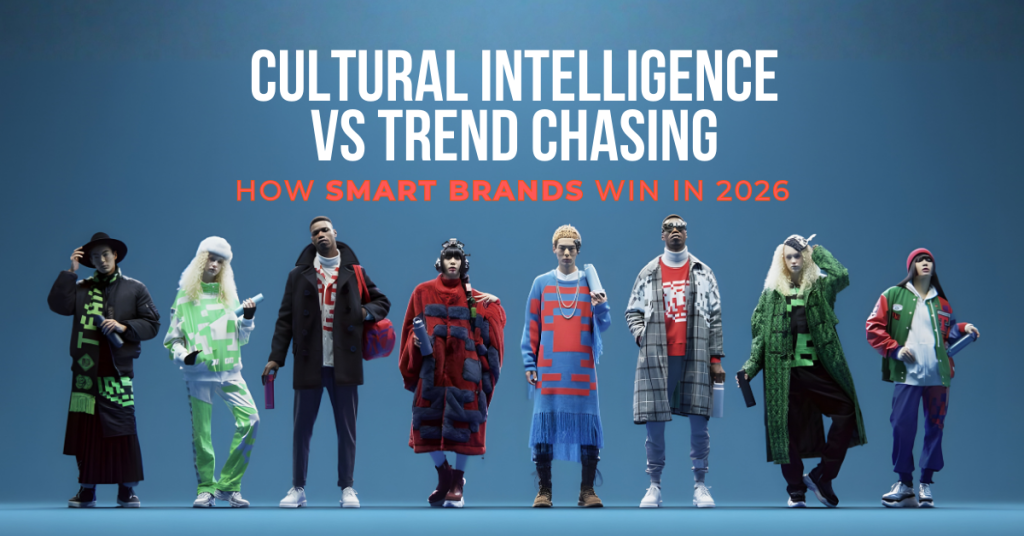
In 2026, the brands that win are no longer the ones that move the fastest; they are the ones that think deeper. As the marketing industry grapples with accelerated cultural cycles, algorithmic pressure and an increasingly sceptical consumer, a clear divide has emerged between brands that chase trends and brands that understand culture. The difference is not cosmetic. It is structural, strategic and, increasingly, commercial.
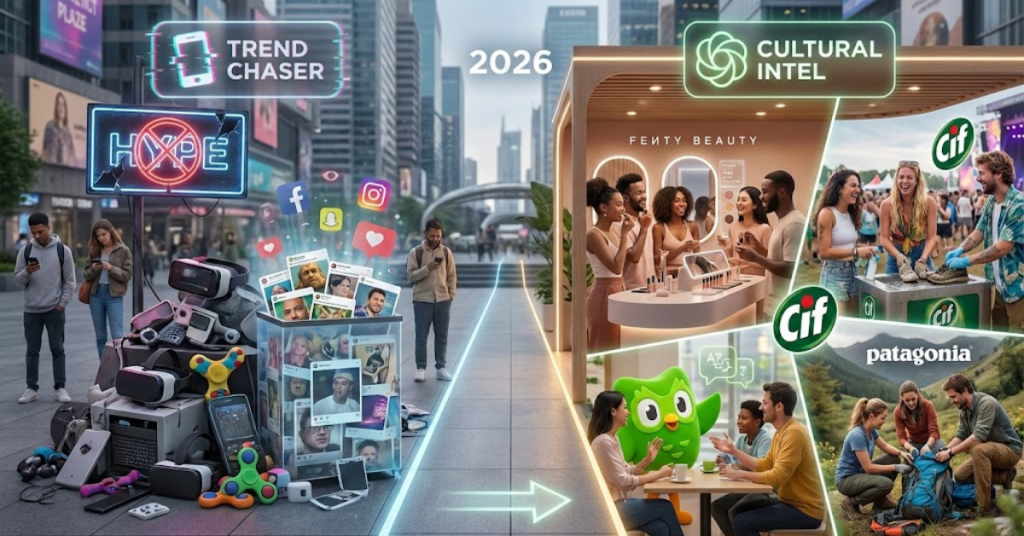
Trend chasing, once considered a hallmark of agility and cultural awareness, has evolved into a high-risk, low-reward strategy. Digital culture now moves at a pace that outstrips traditional brand decision-making, meaning most trend-led executions arrive late, diluted or disconnected from the communities that originated them. Audiences have developed a sharp radar for performative participation. They can tell when a brand is present for relevance rather than resonance, and they disengage accordingly.
Cultural intelligence, by contrast, operates upstream in the decision-making process. Rather than reacting to what is popular, brands analyse why certain behaviours, narratives and aesthetics are gaining traction and what they signal about audience needs, pressures and identity. This requires reading culture through context and using those insights to guide participation, not dictate imitation. In 2026, audiences reward this approach with deeper engagement, higher trust and sustained loyalty because it signals understanding rather than opportunism. Cultural intelligence is no longer an expressive layer added at execution; it is a strategic capability that shapes whether a brand participates at all.
This shift is being driven by a consumer landscape shaped by fatigue and fluency. Audiences, particularly younger cohorts, are deeply literate in brand behaviour. They understand algorithms, monetisation and marketing mechanics. They do not expect brands to be perfect, but they do expect them to be self-aware. Attempts to borrow language, humour or visual codes without understanding their origin are immediately exposed. In this environment, authenticity is not about tone; it is about the alignment between brand values, actions and cultural participation.
From a marketing perspective, cultural intelligence reframes how value is created. Rather than building campaigns around moments, intelligent brands build frameworks that allow them to participate in culture consistently and credibly over time. This requires investment in insight, not just information. Social listening tools may surface what is trending, but they cannot explain the meaning, sentiment, or consequences. Brands that are leading in 2026 are pairing data with human interpretation, bringing together strategists, creators, community managers and cultural researchers to decode behaviour rather than simply observe it.
The implications for influencer and creator marketing are equally significant. Transactional, trend-based collaborations are giving way to longer-term partnerships rooted in trust and shared values. Creators are no longer distribution channels; they are cultural intermediaries. Brands that treat them as such benefit from relevance that feels earned, not rented. This approach reduces reputational risk, improves creative performance and builds sustained audience affinity.
Crucially, cultural intelligence also introduces discipline. Not every brand needs to comment on every cultural moment, and not every silence is a missed opportunity. In many cases, restraint is the most intelligent move a brand can make. Knowing when not to participate is as important as knowing how.
Cultural intelligence becomes effective when it is embedded into how brands plan, brief, partner, and evaluate, rather than applied at execution. Culturally intelligent brands plan around audience realities such as economic pressure, identity shifts and behavioural fatigue, instead of fleeting moments, which creates consistent strategic territories rather than reactive bursts and earns sustained attention over time.
Briefs are grounded in clear cultural hypotheses, defining the behaviour being addressed and the brand’s credible role within it, resulting in work that feels intentional rather than opportunistic and reducing audience scepticism. In partnerships, this approach prioritises trusted cultural intermediaries over trending faces, shifting creator relationships from transactional to relational; audiences respond with higher trust, organic sharing and lower resistance because the brand presence feels earned.
Evaluation then focuses on resonance rather than reach, measuring sentiment quality, repeat engagement and long-term association, which audiences reward with loyalty rather than one-off interaction. This is the distinction that matters in 2026: trend chasing captures attention in the moment, while cultural intelligence builds meaning that lasts, turning visibility into credibility and participation into permission.
It requires patience, curiosity and a willingness to accept that culture does not exist to serve brand objectives. Brands earn their place within it.
As marketing enters its next chapter, the question is no longer whether a brand is culturally present, but whether it is culturally competent. Trend chasing will continue to offer short bursts of attention, but it is cultural intelligence that builds relevance that lasts.
By Somila Gwayi