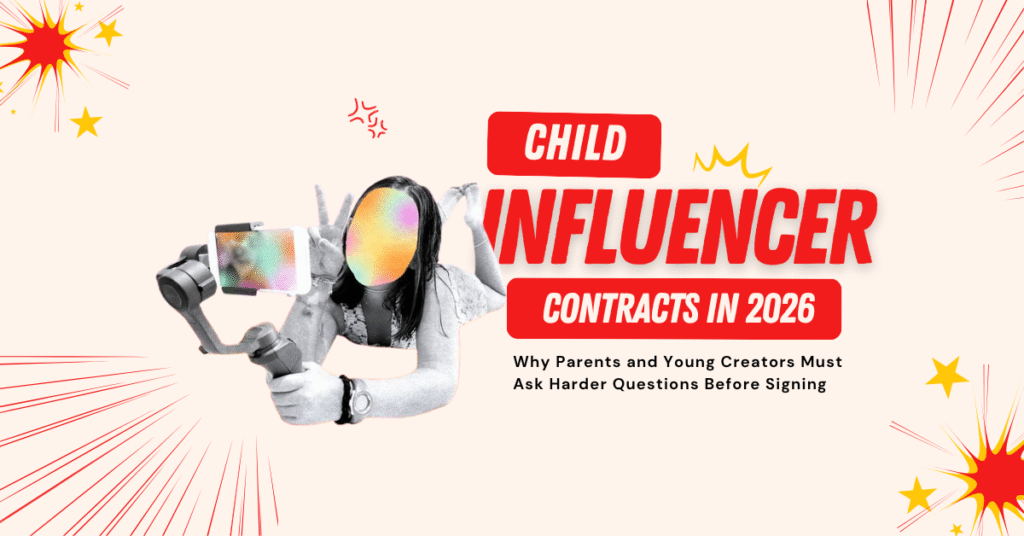
The creator economy has evolved from casual content sharing into a structured commercial industry, and children are increasingly part of that ecosystem. From dance trends and comedy skits to brand partnerships and monetised family channels, young creators are building audiences that translate into real revenue. With that growth comes a critical responsibility that many families are only beginning to understand. When contracts enter the conversation, the stakes shift dramatically, and what appears to be an opportunity can quickly become an obligation.
Recent online discussions have raised concerns about a supposed TikTok-focused institution that allegedly structures agreements in a way that resembles a 360 music label deal, where a central entity retains rights and percentages across multiple revenue streams. Without naming or validating specific claims, the wider issue demands attention. If minors are entering agreements that assign control over their content, likeness and income for extended periods, then the industry must pause and interrogate the mechanics behind those contracts rather than romanticise the pathway to digital fame.
At the centre of this issue are children who often do not fully grasp the legal and commercial implications of what they are signing. Their parents or guardians carry that responsibility, yet many are navigating contracts for the first time, while agencies and brands operate with far greater experience. That imbalance alone should raise concern.

This becomes more critical when viewed against South African child labour and protection laws, which place clear limits on how minors can participate in work. These include restrictions on working hours, the requirement for guardian supervision and safeguards to ensure a child’s wellbeing and education are not compromised.
The creator economy, however, often operates in a grey area. When content creation becomes structured, continuous and tied to income or contractual deliverables, it starts to resemble formal work, but without the same level of oversight. That is where the risk lies.
A contract involving a minor should not only define ownership and payment terms. It should also reflect compliance with these protections and prioritise the child’s rights above commercial gain.
What is truly at stake extends beyond money. Some agreements may include exclusivity clauses that prevent a child from working with other brands, broad image rights assignments that allow third parties to use their likeness across campaigns, or long-term licensing terms that are difficult to terminate. In the worst case, a minor could find themselves tied to an agreement that shapes their digital identity and earning potential well into the future. When content is created in childhood but monetised indefinitely, questions of consent and autonomy become more complex.
Beyond legal compliance, there is the question of good faith. Contracts involving minors should not only meet regulatory standards, but also align with basic principles of fairness and protection.
A child cannot fully understand the long term impact of signing away rights to their image or content. If an agreement allows others to benefit from that long after the child has grown, the issue shifts from legal to ethical. Legality sets the baseline. Good faith determines whether it is fair.
The risks are most visible on high-growth platforms such as TikTok, Instagram and YouTube, where monetisation tools are integrated and visibility can scale overnight. They also emerge in environments that position themselves as talent incubators or educational pathways linked to content creation. When commercial agreements are framed as standard practice or as a necessary step toward success, families may feel pressured to sign quickly to avoid missing out. Speed, however, is rarely aligned with protection.
In 2026, asking more questions is not resistance. It is a responsibility. Before signing any agreement, parents should insist on a formal session where the contract is explained in clear, accessible language. Every clause should be interrogated. How long does the agreement last? Who owns the content once it is published? Is the child’s image licensed exclusively and for which territories? What percentage of revenue is retained and what deductions apply? What are the exit conditions if circumstances change? If the answers are vague or defensive, that is a signal to slow down.
Independent legal advice is not optional in this environment. Consulting an attorney with experience in entertainment law, media law, or intellectual property can prevent costly mistakes. In South Africa, families can seek guidance through the Legal Practice Council, independent law firms specialising in media and entertainment, or child rights organisations that focus on digital safety. One can also approach individual firms with a pro bono department or law clinics in the case of financially indigent individuals. Advertising regulatory bodies and child protection organisations can also provide direction if there are concerns about unfair or exploitative practices. No parent should feel isolated in this process. Support structures exist and should be used.
There is also a broader ethical responsibility that rests with brands and agencies. Partnering with minors requires heightened diligence and transparency. Contracts should be structured with limited terms, clear revenue splits, transparent reporting and reasonable termination clauses. Where appropriate, earnings should be safeguarded through trust structures to protect the child’s financial future. Exposure is not a substitute for fairness, and opportunity should never be contingent on surrendering disproportionate control.
The creator economy is not slowing down, and young talent will continue to emerge. The question is whether the systems surrounding that talent prioritise empowerment or extraction. Allegations around TikTok-focused institutions should not be treated as an isolated controversy but as a catalyst for deeper industry reflection. Children are not simply content producers. They are minors whose well-being, autonomy and future rights must remain central.
Signing a contract without fully understanding its implications is not a minor oversight. It can shape years of creative freedom, financial entitlement and personal identity. In a digital landscape where fame can arrive overnight, protection must move just as quickly. The smartest move any parent or young creator can make in 2026 is simple but powerful. Slow down, read everything, seek independent advice and interrogate every promise before putting pen to paper.