
FNB’s expansion of eWallet services onto WhatsApp may appear as a fintech evolution, but through a marketing and social lens, it signals a far more profound shift. It represents the rise of conversational commerce, where communication, content and transaction converge into a single, seamless experience. In a market like South Africa, where WhatsApp has over 23 million users and is deeply embedded in daily behaviour, this is not just about financial access. It is about redefining how consumers discover, validate and act on purchasing decisions in real time.
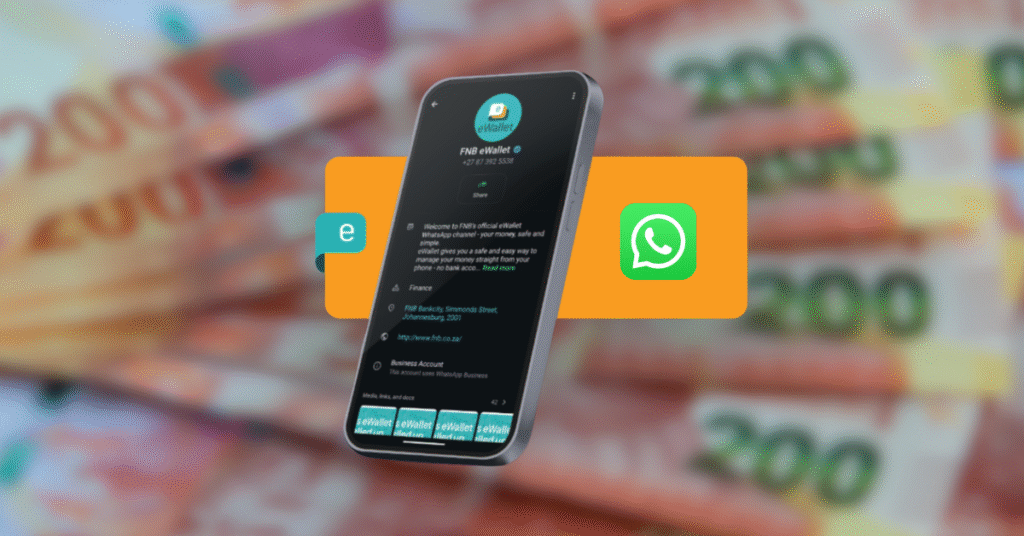
At a functional level, the integration enables users to send and receive money, purchase prepaid electricity and airtime, make instant payments via PayShap and withdraw cash at participating retailers, all within WhatsApp. eWallet is already one of South Africa’s most widely used digital money transfer tools, having processed over R43 billion across 69 million transactions in the past year alone. What FNB has done is remove friction by embedding these services into a platform that already commands high engagement and trust.
However, the real shift sits within social behaviour. This impact extends beyond banking users to include brands, creators and marketers navigating an increasingly decentralised attention economy. South African consumers are not making decisions in isolation. They are influenced by what they see on TikTok, what they discuss in WhatsApp groups and what creators validate across social media platforms. The journey from discovery to purchase is no longer linear. It is social, layered and often private.
What this integration introduces is a new behavioural reality where transactions become part of conversation. Instead of moving from social platforms to external websites or apps, users can now act immediately within the same environment where recommendations are shared. This collapses the traditional funnel and creates a more fluid journey where influence and conversion happen in the same moment.
From a social media perspective, this is where things get interesting. WhatsApp has historically been classified as dark social, a space where sharing and decision making happen beyond the visibility of brands and analytics tools. Yet, it is one of the most powerful drivers of action. Product links, voice notes, screenshots and recommendations circulate rapidly within trusted networks. By introducing payment functionality into this space, FNB is effectively turning WhatsApp into a high trust commerce engine that operates outside traditional marketing visibility.
This has direct implications for the creator economy. Creators have already established themselves as key drivers of discovery and influence, particularly on platforms like TikTok and Instagram. However, conversion has often required a shift in platform or behaviour. With conversational commerce, that gap narrows significantly. A creator can spark interest publicly, but the decision and transaction may happen privately within WhatsApp. This creates a dual layer of influence where public content drives awareness and private networks drive action.
For brands, this changes how success should be measured. Traditional metrics such as reach, impressions and even clicks may no longer fully capture impact. Influence will increasingly be reflected in conversations, shares and transactions that happen in spaces brands cannot directly see. This requires a shift towards more holistic measurement frameworks that consider community engagement, creator alignment and repeat behaviour rather than relying solely on trackable performance data.
The opportunity is clear. Brands that understand how to integrate into these social ecosystems can shorten the path to purchase and increase relevance at the moment of intent. Campaigns can move beyond awareness and into action more efficiently. Creators can be leveraged not just for visibility, but for driving tangible outcomes. WhatsApp, in this context, becomes more than a communication tool. It becomes a conversion layer embedded within everyday social interaction.
The challenge, however, lies in control and visibility. As more activity moves into private channels, brands lose a degree of oversight. Conversations cannot be easily monitored, and attribution becomes more complex. This requires a level of trust in both creators and communities, as well as a willingness to operate in spaces where influence is felt more than it is measured.
There are also important considerations around trust and security. As financial services integrate into social platforms, users must be confident in the legitimacy of the channels they are engaging with. Education around safe usage and verification will be critical to ensuring that increased accessibility does not introduce new vulnerabilities.
Ultimately, FNB’s move reflects a broader convergence between social media, the creator economy and commerce. Banking is becoming embedded, invisible and intuitive. Social platforms are evolving into transaction spaces. Creators are moving closer to the point of purchase. For marketers, this signals a shift away from linear campaigns towards ecosystems that live within conversations.
In South Africa, where community driven decision making and mobile first behaviour are already deeply entrenched, this convergence presents a significant opportunity. The brands that succeed will be those that understand how to operate within these social dynamics, show up authentically and make it easy for consumers to act when intent is highest.
This is not just about being seen. It is about being shared, discussed and acted on in the moments that matter most. And increasingly, those moments are happening in private chats, not public feeds.
By Somila Gwayi