
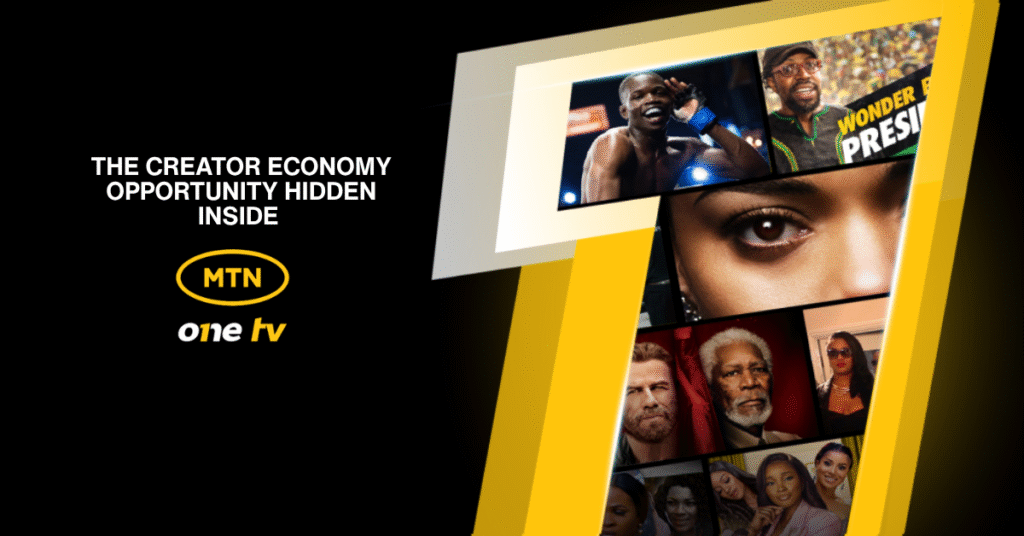
MTN just launched a streaming platform and if you read that as a telecom story, you are already missing the point. MTN One TV, the telco’s new streaming service offering live television, local content, and international programming across its African markets, is being discussed in the context of Netflix, Canal+, and the future of Showmax. That conversation is valid but incomplete. The more important conversation, the one that directly affects creators, brands, marketers, and anyone building an audience on this continent, is about what this move signals for the African attention economy and who gets to profit from it next. That is the story worth paying attention to.
Africa’s streaming landscape did not arrive at this moment in good health. Showmax, once the most credible pan-African streaming challenger with genuine local content ambition, lost significant ground following its acquisition by Canal+. The contraction of its local content investment was not just a business decision. It was a signal that global and hybrid platforms still struggle to commit to African stories at the scale African audiences deserve. The gap that was created is real, and MTN One TV is positioning itself to occupy it.
However, what makes this more than a streaming story is how MTN is built to enter this space differently to every competitor that came before it. MTN operates across 18 African markets with a subscriber base exceeding 280 million people. More importantly, it holds the number one African brand position across Gen Z, Millennials, and Gen X according to the Brand Africa 100 survey. This is not a new entrant buying its way into the attention economy. This is the most trusted institutional name on the continent deciding that distribution alone is no longer enough and that owning the content layer is the next logical move.
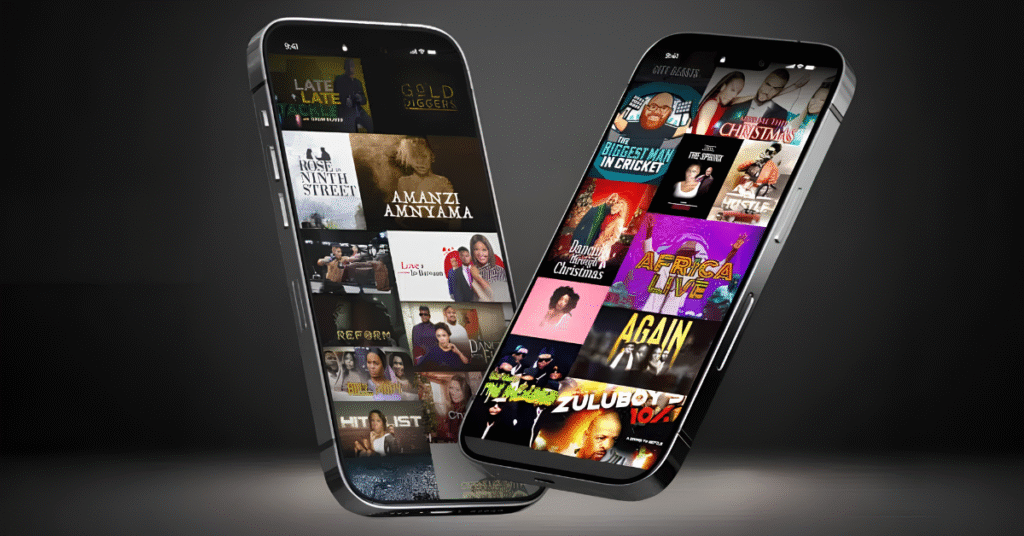
For much of the continent, conventional payment infrastructure has been the silent barrier that streaming platforms never adequately solved. Credit card penetration remains low across key African markets, banking access is uneven, and the assumption that subscribers would pay the way Western consumers pay quietly excluded millions of viable audiences before a single frame of content was ever served. The solution is not complicated, but it requires platforms to meet consumers where their financial lives actually exist. MTN One TV’s approach is instructive here. By enabling payment via airtime, Mobile Money, and traditional subscriptions depending on the market, the platform demonstrates that access to sophisticated centralized payment infrastructure is no longer a prerequisite for distribution at scale. The barrier was never the audience’s willingness to pay. It was the industry’s failure to build payment architecture around how Africans actually transact.
For creators, this development carries implications that go well beyond having another platform to pitch content to. The structural shift happening here is about who controls the pipeline between African creative output and African audiences. Nigeria’s Nollywood produces an estimated 2,500 films annually, making it the second largest film industry in the world by volume, yet monetisation infrastructure has consistently lagged behind production capacity.
South Africa’s screen production sector employs tens of thousands of people directly and supports a much larger freelance ecosystem spanning writing, directing, post-production, and technical craft. Kenya’s independent film and music video industry is growing rapidly. Talent has never been the problem but distribution and investment have always been the bottleneck.
For brands and marketers, the signals here are equally significant. The African attention economy is fragmenting and expanding simultaneously. Audiences are increasingly distributed across streaming platforms, social media, podcasts, and creator-led content ecosystems. A telecom with 280 million subscribers entering the content space is not just adding another channel to the media mix. It is consolidating distribution, payment infrastructure, and audience data in a single ecosystem. Brands that understand this early will be better positioned to navigate what comes next, whether that means content partnerships, integrated campaigns, or creator collaborations built specifically for emerging African platforms.
The creator economy angle is particularly worth watching. Globally, telcos and streaming platforms are beginning to recognise that creator-led content is not supplementary to platform strategy. It is increasingly central to it. YouTube’s dominance is built on it. TikTok’s growth is inseparable from it. If MTN One TV moves in this direction and builds genuine infrastructure for African creators to distribute, monetise, and grow audiences within its ecosystem, the implications for influencer marketing, branded content, and the broader business of influence on the continent are significant.
Africa has approximately 600 million smartphone users. Digital content consumption is not a future behaviour. It is a present and accelerating reality. The audience is here. The creative talent is here. The question has always been whether the infrastructure built to serve them would be designed with them in mind or simply designed around them.
MTN One TV is an early and imperfect answer to that question. The architecture is more promising than anything that has come before it. The brand trust behind it is genuine. But the creative economy, the brands, and the audiences watching this launch are not naive. They have seen ambitious platforms arrive and retreat. They know the difference between a platform built for Africa and a platform built in Africa.
The next 24 months will reveal which one this is. The signals so far suggest MTN understands the assignment. Whether it delivers on it is the only question that matters.
By Somila Gwayi