Retail is no longer competing on convenience alone. Consumers can access almost anything instantly, which means brands are now competing on experience, emotion and cultural relevance. In beauty particularly, purchasing behaviour has evolved beyond products and pricing. Discovery now happens through creators, communities, routines and social participation. People are no longer simply buying beauty products. They are buying into identity, aspiration and belonging.
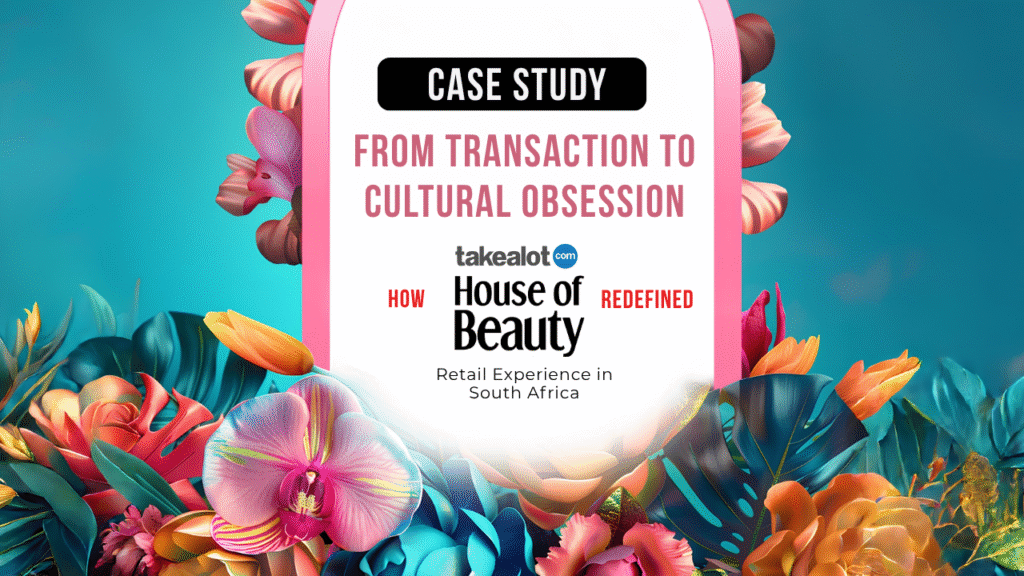
Takealot House of Beauty arrived at the centre of this shift and quickly became more than a retail event. It became a cultural signal, meaning it represented a broader shift in how consumers want to experience brands today. People were not only interested in shopping. They were drawn to the feeling of being part of something socially relevant, exciting and worth talking about. The rapid demand for tickets reflected how audiences increasingly value experiences that allow them to participate, connect and share in real time, particularly within beauty and lifestyle culture.
What made the moment significant was not just the scale of anticipation of the event or the speed at which tickets sold out. It was what that demand represented. Audiences were responding to the opportunity to participate in something immersive, social and emotionally engaging. In many ways, the event reflected a broader evolution taking place across retail globally, where brands are increasingly expected to create worlds consumers can step into rather than simply platforms they can purchase from.
This created a unique opportunity for Takealot. As an e-commerce platform historically associated with accessibility and convenience, House of Beauty presented the chance to build something far more experiential and culturally resonant. The challenge was not only to drive attendance or social conversation, but to reposition the platform itself within the lifestyle and beauty space in a way that felt aspirational while remaining accessible to a mass audience.
STYLE ID AFRICA approached this through the understanding that modern audiences do not engage with experiences passively. They document them, interpret them and socially distribute them in real time across platforms like TikTok and Instagram. The strategy therefore centred on creating an ecosystem designed for participation rather than passive attendance, where consumers were not simply watching brand moments unfold, but actively interacting with them through creator engagement, live content creation, immersive installations, product discovery and real time social sharing.
Rather than separating commerce from culture, House of Beauty intentionally fused the two. Beauty moved beyond the checkout journey and became something tactile, immersive and communal. Consumers were able to interact directly with products, creators and brands in an environment designed to mirror the way beauty already exists online through tutorials, recommendations, entertainment and peer influence. This allowed the event to feel less like a retail activation and more like a physical extension of internet culture itself.
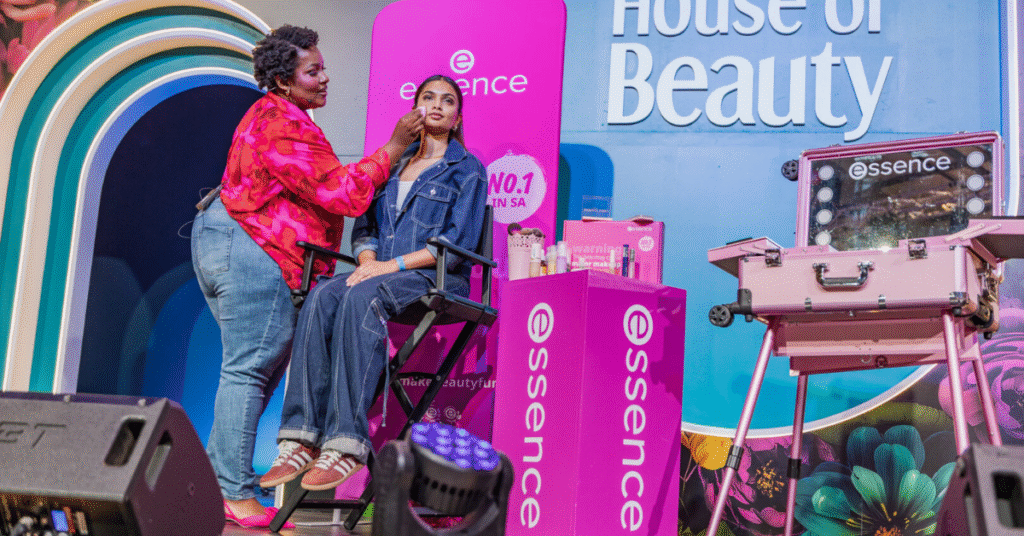
From immersive brand experiences and creator-led moments to entertainment integrations and interactive installations, the environment was intentionally layered to sustain curiosity, participation and social sharing throughout the consumer journey. Every element contributed to the feeling that audiences were not simply attending an event, but entering a cultural moment they wanted to be associated with.
That cultural association translated directly into measurable performance. The campaign generated over 8.4 million impressions and reached more than 3.1 million users across digital platforms, reinforcing the scale of audience interest and visibility generated throughout the event lifecycle. Creator-led content consistently outperformed traditional branded content formats, while video-first storytelling across TikTok and Instagram became a key driver of engagement and reach.
Beyond visibility, the campaign generated strong audience interaction, with high engagement rates across creator content, real-time event coverage and community-driven conversations. Content output exceeded expectations as creators organically extended deliverables through additional stories, recaps, behind-the-scenes moments and audience interactions throughout the festival experience. This level of organic participation reflected the strength of the event’s cultural resonance rather than purely paid amplification.
The scale of post-event conversation further reinforced House of Beauty’s impact within the South African beauty and lifestyle landscape. Audiences organically shared event experiences across social platforms through beauty recaps, product hauls, creator interactions and live content moments that extended the lifespan of the campaign well beyond the physical event itself. Consumer sentiment consistently reflected appreciation for the scale of the production, the accessibility of premium beauty brands and the immersive atmosphere created throughout the experience.
A recurring theme across audience feedback was the way House of Beauty balanced aspiration with accessibility. Consumers responded positively to the opportunity to engage directly with both global and local beauty brands, creators and experiences within an environment that felt premium yet inclusive. This not only strengthened engagement with the event itself, but also contributed toward repositioning Takealot within the beauty and lifestyle space as more than a transactional platform.
That momentum became even more amplified through scarcity. Tickets sold out rapidly, creating urgency and reinforcing the event’s perceived cultural value within social spaces. But the demand did not emerge artificially. It was driven by a carefully built ecosystem of anticipation, community engagement and creator conversation that positioned attendance as both desirable and socially relevant long before doors officially opened.
What made this particularly powerful was the way the event blurred the lines between beauty, lifestyle and entertainment. Global and local beauty brands existed alongside music, technology, luxury beverages and creator culture, creating an experience that reflected how younger audiences naturally engage with brands today through interconnected interests rather than isolated categories. The inclusion of lifestyle partners expanded the event beyond beauty retail and positioned it within a much broader cultural conversation around self-expression, status and participation.
This multidimensional approach fundamentally changed how audiences engaged with the Takealot brand. Rather than interacting with the platform purely as a transactional marketplace, consumers experienced it as a curator of culture, taste and community. The platform became associated not only with product access, but with experience creation and social relevance.
More importantly, House of Beauty demonstrated that physical retail experiences still hold enormous value in an increasingly digital world, particularly when they are designed intentionally. While e-commerce has mastered convenience, consumers are increasingly seeking environments that offer emotional connection, sensory immersion and social interaction. House of Beauty successfully bridged these worlds by translating digital beauty culture into a real-world environment audiences could physically move through, participate in and emotionally connect with.
The success of the event ultimately revealed something much bigger than strong attendance or social traction. It highlighted a broader behavioural shift taking place within consumer culture, where audiences are gravitating toward brands that create meaningful experiences rather than simply market products. Loyalty is no longer built solely through utility. It is built through participation, emotional resonance and cultural alignment.
In this context, the rapid sell-out was never the full story. The real story was that Takealot successfully transformed from a platform consumers purchase from into a brand consumers actively want to experience, document and be associated with and in today’s attention economy, that distinction changes everything.