
Somewhere between the first scroll and the final payment, the travel brochure quietly lost its job. South Africa’s tourism pitch is no longer written by institutions and delivered in glossy print. It is told by athletes, gamers, musicians, influencers and broadcasters. The people whose audiences already trust them. For tourism boards, operators and the small businesses behind the visitor experience, that is not a change of channel. It is a change in who decides what gets seen first.
South African Tourism is direct about the why. Digital platforms now shape first impressions long before a traveller contacts a business, and European holidaymakers increasingly choose destinations after discovering them on social media, watching travel videos or reading reviews. In a study across Spain, Italy and the UK, almost half of Gen Z respondents (48%) cited TikTok as a source of travel inspiration, ahead of recommendations from friends and family at 43%. The study’s organiser is not named in South African Tourism’s account and it covers three markets rather than all of Europe, so the figure is best read as a signal rather than a verdict. The signal is hard to argue with. Discovery has moved upstream, and the story now travels before the booking does.
The response is a content-first strategy, and its flagship move is telling. What We Know, a four-part documentary from Red Bull presented along with South African Tourism, premiered on SABC1 and SABC+ on 24 September, during Tourism Month. Host Eugene Khoza travels the country across four 24-minute episodes, meeting athletes, gamers, musicians, influencers, fans and everyday South Africans. There is no minister and no orchestral montage of landmarks. As South African Tourism’s chief marketing officer, Sithembile Ndaba, puts it, “our greatest asset is also our people.” The destination is sold through the people who came from it, and the place becomes the evidence rather than the headline.
The domestic play is sharper still, and it comes from a different corner of the industry. Just Travel SA, a nine-part series brought to audiences by the Tourism Business Council of South Africa with Tourism Marketing South Africa, premiered on SABC1 on 26 October. Hosts Pearl Thusi and Lungile Radu explore a province per episode alongside a local insider, at three price points: up to R1,050 a day, up to R1,250, and above that. South Africans weighing a holiday in a cost-pressured year do not need to be told the country is beautiful. They need proof it is within reach. By making the budget the premise, the series turns aspiration into arithmetic. Price has become part of the story, not the fine print beneath it.
For tourism boards, this changes the job. A board that once commissioned brochures and trade stands is now a convenor of stories, partnering with media brands that already hold attention and casting people the audience believes. It also owes something to the businesses downstream. The Tourism Business Council’s CEO, Tshifhiwa Tshivhengwa, points out that every trip taken at home supports businesses, communities and jobs, so a campaign that keeps returning to the same famous names simply reproduces the old brochure with better lighting. The province by province format of Just Travel SA shows the alternative: using creator reach to carry lesser known places and operators into the frame.
For operators and lodges, the consequence is blunt. Visibility no longer follows the biggest advertising budget. It goes to whoever appears in the story, and increasingly to whoever the machines can read: 52% of British travellers now use AI tools to plan trips, up from 40% in 2025, so clear, accurate, up to date information is part of being found. Pricing matters too. Once a daily budget is on screen, it becomes a public benchmark, and operators with hidden rates will be measured against numbers they never set. Then there is the stay itself. Data Appeal’s sentiment score among key European markets slipped from 88.2 to 86.5 out of 100 between January and August 2026, with ageing facilities and minor service issues cited. A story can fill the pipeline, but the experience decides what comes back out of it.
For SMEs, the stakes are sharpest, because they have the least marketing budget and the most to gain from being seen. FlySafair’s Travel Booster reflects the shift, giving small tourism businesses support packages worth R350,000 and more, with social exposure built in. Reach is now part of the prize. A family-run lodge can be excellent and still invisible, and the programme treats that as seriously as a lack of capital. Radu’s own take on the series shows what is worth featuring: the value was in meeting people and hearing their stories, not just paying for a bed or a meal. For an SME, a clear story, a library of honest content and a readiness to host creators are assets to build before the opportunity arrives.
That points to a practical playbook for the next campaign, whichever of these three you are. Start with the traveller’s question, not the product’s features. Partner with a platform or creator who already holds the audience. Build a series rather than a single post, because repetition earns trust one execution cannot. Make the proof concrete with a price, a day or a budget the audience can test, and offer tiers as Just Travel SA does, so more people can see themselves in it. Write exposure into partnerships so the small businesses behind the destination benefit too. Then brief for the whole journey, and measure whether the story moved someone to book, not only whether they watched.
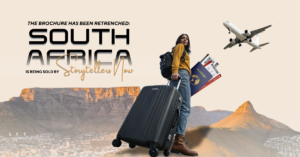
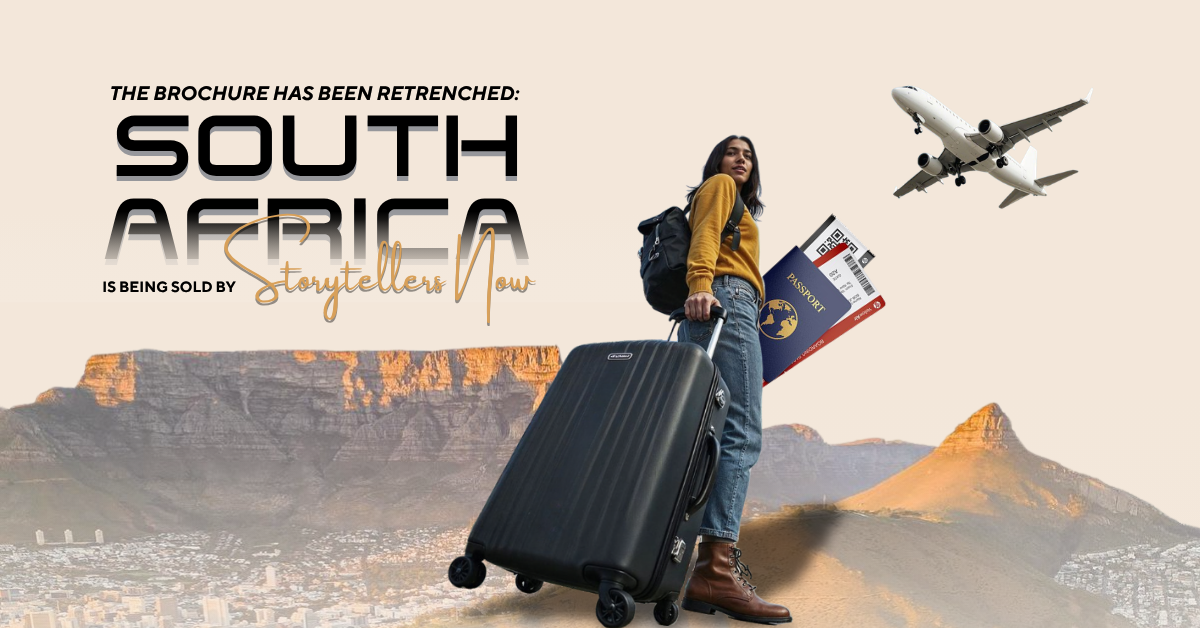
Heading into 2027, tourism marketing in South Africa will be judged by a different question. Not how many people saw the campaign, but who was in the story and whether it made someone want to be there on a budget they could actually afford. The brochure has been retrenched. The storytellers are not going anywhere, and the tourism businesses that find their place in the story now will be the ones travellers meet first.
By Somila Gwayi