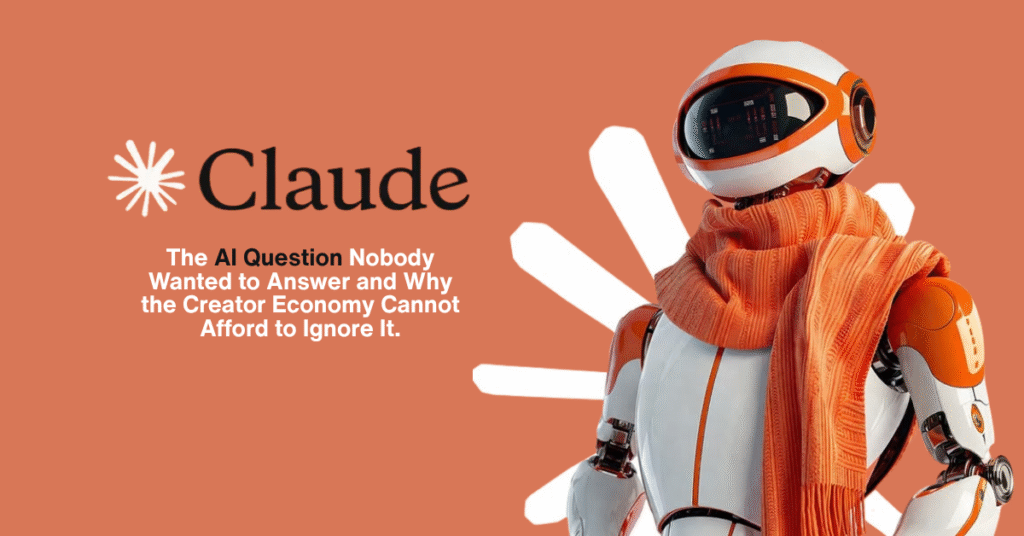
When Oprah Winfrey recently sat down with Anthropic CEO Dario Amodei, she did something that stopped the conversation cold. She asked Claude, the AI built by the very company she was interviewing, to write the most important question she should put to its creator. The response was not diplomatic. It went straight to the existential tension sitting at the heart of the AI industry, and Dario answered it honestly. What followed was one of the more revealing public conversations about artificial intelligence to take place outside of a congressional hearing room, and it arrived at exactly the right moment.
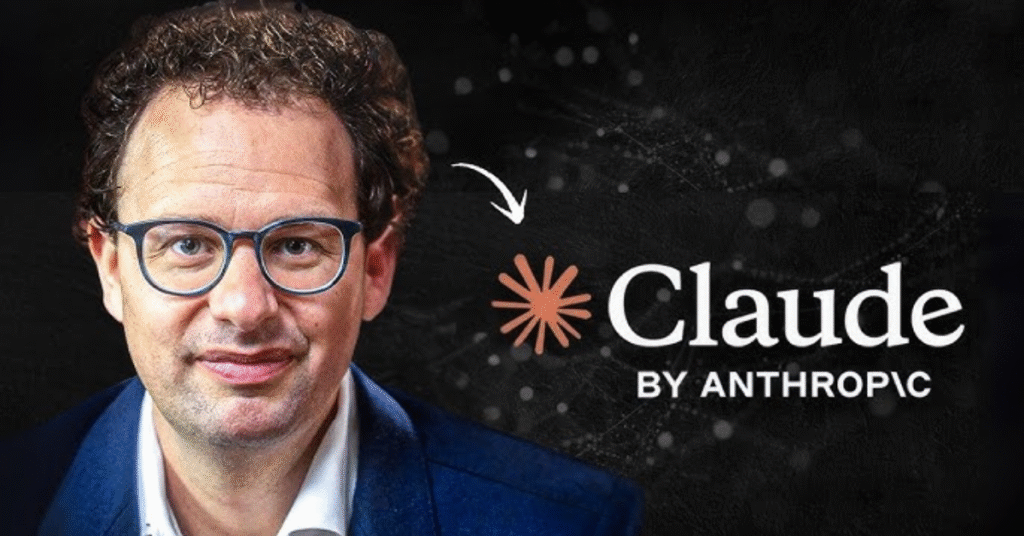
The response was simple and most instructive, the question, as you will soon see, is equally as simple yet gives rise to many more questions. His response was “ So this technology is an epochal change for humanity… And so the way we think about this company is that there are many companies building this technology. It’s something that is happening to humanity one way or another. And there’s this train. It’s going very fast in some direction. You don’t want it to crash. You can’t stop the train but what you can do is you can steer the train. Steer the train so that it doesn’t hit the rocks and I think the way we think about Anthropics is we want to do things the right way.”
His response highlights that AI is no longer a background technology being quietly threaded into enterprise systems. It is in the room, on prime time, being interrogated by one of the most culturally significant interviewers alive. When Oprah Winfrey, a woman who has spent five decades making the most powerful people in the world accountable to ordinary ones, sits across from the CEO of an AI company and asks his own technology to write the hardest question she should put to him, something has shifted. That is not a scheduled press moment. It is culture catching up to consequence, and for the creator economy, it is an overdue signal to pay serious, strategic attention.
The global creator economy is currently valued at approximately $250 billion and projected to reach $528 billion by 2030, according to Goldman Sachs. Over 50 million people worldwide identify as content creators, with approximately 2 million operating as full-time professionals. In South Africa specifically, an estimated 1.5 million people are active content creators across YouTube, TikTok, Instagram, and podcast platforms, operating within a digital advertising market valued at over R10 billion annually.
This is not a peripheral industry. It is a significant, growing, and increasingly contested economic layer, and AI is restructuring its economics whether the people inside it are ready or not. Tools that once required a full production team, a copywriter, a graphic designer, a video editor, a strategist, can now be approximated by a single person with the right AI stack in a fraction of the time and at a fraction of the cost.
The scale of corporate AI integration makes that clear. According to McKinsey’s 2024 State of AI report, 65% of organisations globally are now using generative AI in at least one core business function, up from 33% the year prior. Marketing and content creation rank consistently among the top three use cases. What that means in practice is that tasks which previously required dedicated creative headcount, copywriting, social content, video scripting, design briefs, and campaign ideation, are increasingly being handled or augmented by AI tools at a fraction of the previous cost and time. For brands and agencies, this is an efficiency gain. For creators, it is a direct restructuring of the market they operate in, and the distinction between those two realities is where the real conversation about AI replacing creators versus AI collaborating with them needs to happen.
The displacement risk at the entry level is real and should not be softened. The World Economic Forum projects that AI will displace approximately 85 million jobs globally while simultaneously creating 97 million new ones. The net number sounds balanced until you examine who absorbs the losses and who captures the gains. They are not the same people. In South Africa, where youth unemployment exceeds 60% and the creative sector has long been one of the more accessible economic entry points for young people without formal qualifications, the erosion of entry-level creative work is not an abstraction. It is a structural threat to one of the few industries where talent has historically mattered more than credentials.
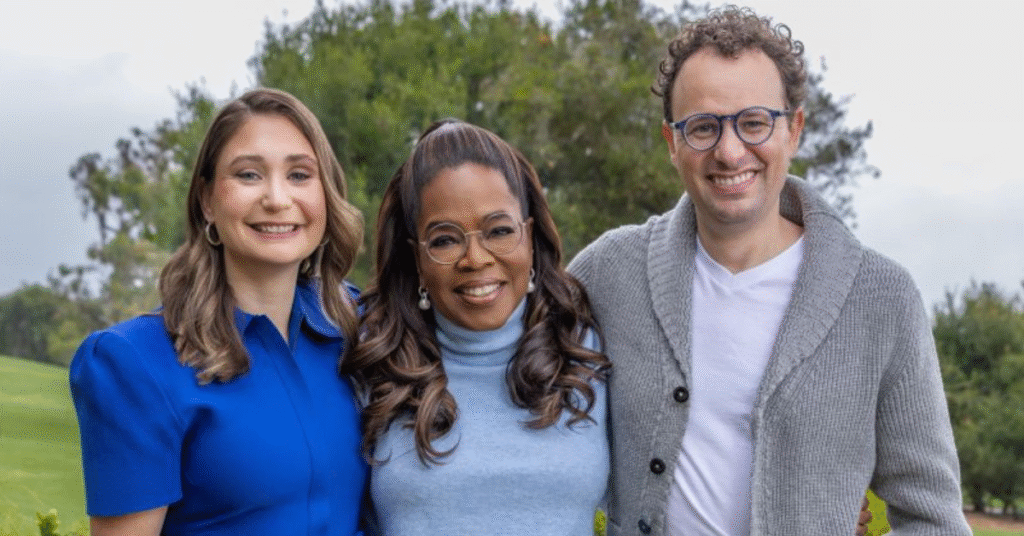
Which is precisely why the question Claude generated for Oprah to ask lands the way it does. “You have said there is a meaningful chance the technology your company is building could cause human extinction, and yet you are racing to build it faster. How do you justify that to the rest of us who did not get a vote?” Dario did not deflect. He reached for the longest possible lens. AI, he argued, is not unlike fire or the steam engine, transformative, dangerous in the wrong hands, but ultimately worth building if steered with intention. The train is moving, he said. You cannot stop it. But you can steer it away from the rocks. For anyone building a livelihood inside the creator economy, that metaphor is not abstract. The train is already in your station.
That tension is precisely why the values architecture behind the companies building this technology deserves more scrutiny than it typically receives. Anthropic, the company behind Claude, occupies a distinct position in the AI landscape. It is structured as a Public Benefit Corporation, legally obligated to balance commercial interests against social good. Its co-founders have publicly pledged 80% of their personal Anthropic wealth to philanthropic causes. And in a decision that cost the company significantly, Anthropic walked away from Pentagon contracts that every other major AI company accepted, drawing hard lines around autonomous weapons systems and domestic mass surveillance. These are not marketing positions. They are operational choices that carry real commercial consequences, and they matter because the values embedded in how AI companies are built ultimately shape what the technology does and who it serves.
For South African creators, the access question sits beneath all of this and demands honest engagement. The AI tools currently reshaping creative industries globally are predominantly priced and designed for markets with stronger purchasing power and more stable currency.
A South African freelance creator navigating dollar-denominated subscription costs against a rand-denominated income is already operating at a structural disadvantage before the displacement conversation even begins. Addressing that gap requires more than individual resourcefulness. It requires platform pricing strategies, data cost interventions, and policy frameworks that reflect the actual economic conditions of African digital markets rather than assuming a universal middle-class consumer.
Yet the opportunity is genuine for those who approach it with the right intent. Creators who treat AI as a collaborator rather than a competitor are finding that the economics of their work shift meaningfully in their favour. Research, scripting, captioning, translation, SEO optimisation, and cross-format content repurposing are all areas where AI integration reduces production time without eroding the creative voice that audiences follow. Oprah’s own admission during the interview was instructive. She had long resisted using AI in her creative process, wanting to protect what she described as the heart of herself in her work, until she tried it and found that it sharpened rather than replaced her thinking. That is not a small concession from someone who has built an empire on the belief that authentic human connection is irreplaceable. It is a precise and honest description of what thoughtful AI integration actually looks like in practice.
The brands and agencies that understand this earliest will build creator partnerships around AI-augmented creative capacity rather than AI-replaced creative headcount. The creators who thrive will be the ones who treat fluency in these tools as a core professional competency rather than a compromise of their craft. And the corporations integrating AI into their systems at scale carry a responsibility that extends well beyond internal efficiency, which is to ensure that the creative ecosystems they depend on for cultural relevance remain economically viable for the humans who built them.
The technology is moving. The question was never whether to engage with it. It is whether African creators, with everything this continent has demonstrated about cultural output, creative resilience, and audience understanding, will help shape where it goes next or simply inherit wherever it lands.
By Somila Gwayi