
28 million views. 62 countries. One isiZulu language series.
The Polygamist has become one of Netflix South Africa’s most unexpected global successes, reaching audiences far beyond the market it was made for. The interesting part is not simply that a South African story travelled. It is that it travelled without becoming less South African.
For years, the logic of television was built around distribution. If you wanted to reach a large audience, you needed access to the right channel, the right package, the right schedule. The decoder was the gateway between content and audience. That relationship is changing.
The algorithm does not need a story to be universally familiar before it recommends it. It can see out and find the audience for highly specific content, then find the next audience, and the next one after that.
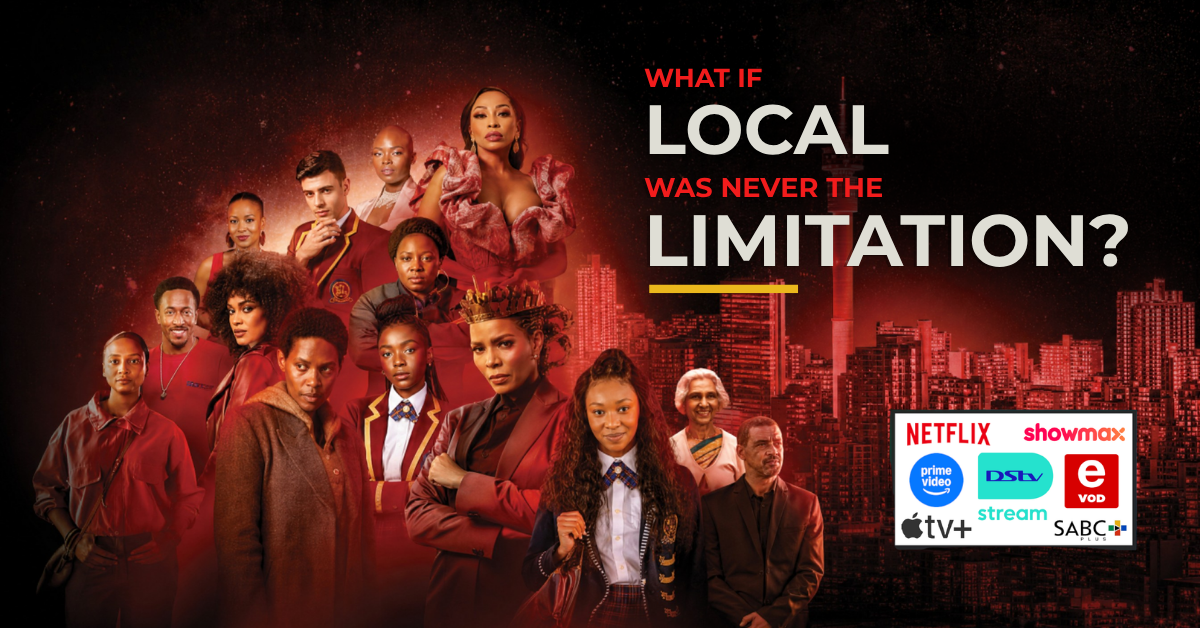
This raises a more interesting question for marketers: what if local was never the limitation? What if distribution was?
The success of The Polygamist suggests that specificity can be an export asset. An IsiZulu language story does not have to abandon its cultural context to travel. In fact, its cultural specificity may be precisely what makes it distinctive in an increasingly crowded global content market.
Netflix has been building towards this for some time. Since launching in South Africa, it has commissioned more than 300 local titles, signalling that African stories are no longer being treated simply as content for African audiences. They are becoming intellectual property with the potential to travel across markets.
The opportunity is no longer to make content that just resonates here. It is to create stories, characters and worlds with enough cultural specificity to become relevant elsewhere.
And when distribution is no longer controlled by a broadcaster, the economics of that opportunity start to shift too.
The clearest signal may actually be coming from the incumbent.
DStv’s latest package overhaul under Canal+ is not the death of traditional television. Sport remains a powerful reason to subscribe, satellite remains relevant, and DStv still has enormous cultural reach.
For the first time in years, DStv is breaking apart the bundle that helped define its value. Its new five tier structure allows customers to buy different combinations of entertainment, movies, series and sport, with sport available separately from the traditional premium proposition.
The bundle was built on the assumption that the value of television came from bringing many things together under one roof. The new model recognises that viewers are increasingly willing to choose the specific value they want.
In other words, the decoder is no longer the product in quite the same way it once was.
The content is and that is the bigger transition marketers should be watching.
Because when audiences stop being organised primarily around channels and start being organised around content, communities, recommendations and interests, reach becomes less of a destination and more of a consequence.
The question is no longer simply: How many people does this platform reach?
It becomes: What is making people choose this content, and where does that attention travel next?
That distinction matters for brands. If audiences are moving between linear television, streaming platforms, social feeds, and creator ecosystems, then next year’s media strategy cannot simply move a percentage of the television budget into streaming and call the job done.

The planning model itself needs to catch up.
Streaming and AVOD should not only be considered as alternative distribution channels, but as environments where audiences are actively choosing what deserves their attention. Local originals create another layer of opportunity because brands can move beyond conventional sponsorship and consider adjacency to intellectual property that already has cultural momentum.
That requires a different understanding of relevance.
A brand does not necessarily need to own the biggest audience. It needs to understand why an audience has gathered, what has brought them there, and what makes that attention move.
The same shift is playing out at a regulatory level. ICASA’s attempt to examine the impact of over- the-top services and their relationship with South Africa’s broadcasting ecosystem is evidence of a system trying to catch up with a market that has already moved. The same shift is playing out at a regulatory level. In September, ICASA published a notice of its intention to investigate the impact of over-the-top services on licensed operators and South Africa’s regulatory framework. The proposed inquiry was essentially asking whether the rules built around traditional telecommunications and broadcasting still make sense in a market where internet-based services are increasingly competing for how people communicate, consume content and spend their attention. That puts services such as streaming platforms into a regulatory conversation historically shaped around licensed broadcasters and network operators.
The notice was withdrawn in October, with ICASA citing administrative and procedural matters and saying it would republish the notice with greater context and clearer guidance for public participation. The inquiry itself has not disappeared from the regulatory agenda. More importantly, its existence tells us something about the market: the infrastructure and rules governing South Africa’s media ecosystem are having to catch up with the way audiences already consume it.
That matters here because the shift is not simply from DStv to Netflix. It is from a media environment where distribution was controlled by a relatively small number of gatekeepers to one where content can reach audiences through platforms, recommendations and algorithms outside the traditional broadcasting model. The regulator is catching up to a change marketers are already
The detail matters less than the direction.
Regulation is now having to account for a screen economy where the distinction between broadcaster, platform and content distributor is becoming increasingly blurred.
The audience has already moved ahead.
For producers and rights holders, that creates a different kind of leverage. Owning intellectual property matters more when a story can travel without being confined to the market or channel in which it was created.
For traditional broadcasters, it means the challenge is structural rather than simply cyclical. Repricing can make an offer more competitive, but it does not restore the old relationship between audiences and distribution.
And for brands, it means the next media opportunity may not sit where the biggest audience has historically been.
It may sit where attention is being actively created, recommended and transferred.
The decoder used to be the gateway to the audience.
Now the algorithm is increasingly the gateway to the content.
And if the audience has already changed how it gets there, the next question for marketers is whether their media strategies have changed with it.
By Jordan Rwida