
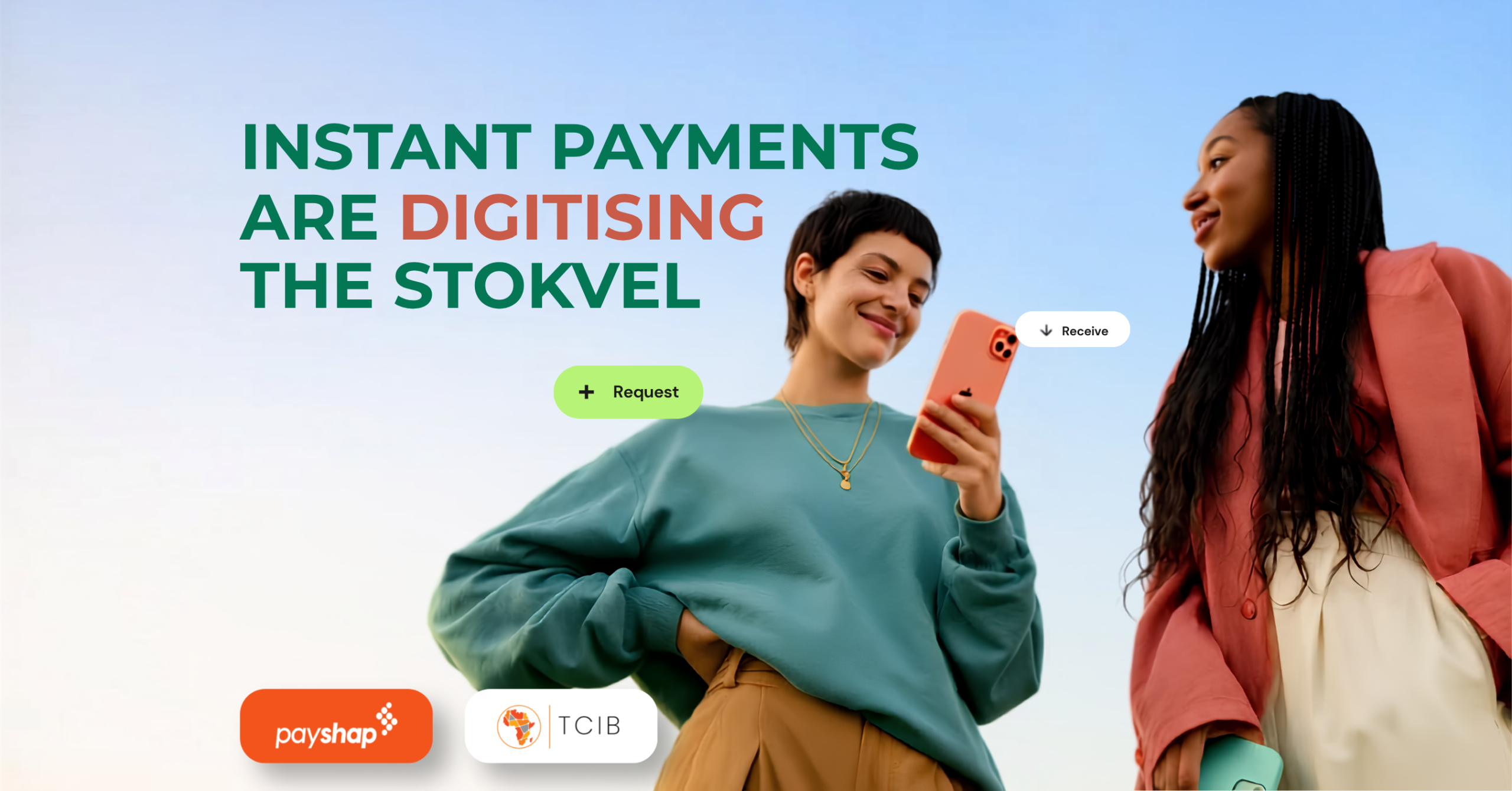

Money in South Africa has never been a private activity. Long before fintech companies arrived with apps, dashboards and personalised savings goals, South Africans were already running some of the most sophisticated informal financial systems in the world. The stokvel, in its various forms, is not a workaround for people excluded from formal banking or who do not have the financial muscle to achieve certain money goals on their own. It has become a deliberate choice, a cultural institution built on collective trust, social accountability, and community rhythm that the formal financial sector has spent decades failing to replicate. What is changing now is not the stokvel, it is the infrastructure underneath it.
PayShap, South Africa’s real-time, low-cost payment system launched by BankservAfrica, has quietly begun to do something significant. It has made person-to-person money movement instant and near-free across participating banks. The friction that once made running a stokvel administratively burdensome, collecting contributions, confirming receipts, tracking who has paid and who has not, is collapsing. Monthly stokvel meetings that required physical presence and cash handling are migrating into WhatsApp groups with PayShap links. The money is moving faster. The trust infrastructure was already there and the technology is simply catching up to the culture.
The scale of what this infrastructure is now touching deserves serious attention. South Africa is home to an estimated 11.4 million stokvel members, with approximately 410,000 active stokvels collectively managing around R50 billion annually, according to the National Stokvel Association of South Africa. This is not a niche financial behaviour. It is one of the largest organised savings ecosystems on the African continent, and it has historically been almost entirely invisible to the brands, financial institutions, and marketers whose products people buy every single month. The stokvel is not a financial product. It is a community with financial cadence, and the distinction matters enormously for anyone trying to reach it.
The shift happening in South Africa is mirrored across the continent through different cultural expressions of the same fundamental institution. In West Africa, the susu and ajo operate on identical principles, rotating savings circles built on personal trust and social obligation. In East Africa, the chama has evolved from an informal savings group into a vehicle for collective investment, property acquisition, and business capitalisation. The enabling infrastructure varies by market. Kenya’s M-Pesa ecosystem has made mobile money movement a daily behaviour for the majority of the population.
The pan-African push toward mobile money interoperability, which allows transfers across different network operators and increasingly across borders, is extending the same capability that PayShap is delivering in South Africa to markets where formal banking penetration remains low but mobile penetration is high and growing. Real-time, low-cost payment rails are not disrupting collective money culture in Africa. They are accelerating it.
What this means for brands and creators requires a fundamental rethink of how financial behaviour in this market is understood and communicated. The dominant framework in marketing, financial services advertising in particular, positions money management as an individual pursuit. Budget your money, grow your savings and protect your future. The language is singular, the aspiration is personal, and the imagery is almost universally of a lone individual making smart private decisions.

This framework describes the financial reality of a minority of South African consumers. It actively excludes the majority, for whom money is a group activity, financial decisions are made in community, and the social dimension of saving and spending is not incidental but central.
The stokvel going digital does not just change the mechanics of collective saving. It changes the data trail, the touchpoints, and the commercial opportunity. A stokvel operating through PayShap and a WhatsApp group is generating digital transaction records, establishing group financial identities, and creating the kind of consistent, high-frequency financial behaviour that is valuable to any brand trying to understand how its target consumer actually moves money. More importantly, the group chat where the stokvel lives is also where product recommendations are shared, where brand experiences are discussed, and where purchasing decisions are made collectively. The stokvel group chat is not just a payment channel. It is one of the highest-trust marketing environments in South Africa, and most brands have no presence in it whatsoever.
For creators, the opportunity is equally significant and equally underexploited. The creators who speak to collective money culture rather than individualist financial self-improvement are building audiences with a depth of trust and community cohesion that algorithmically-optimised content cannot manufacture. A creator who understands how a burial society treasurer thinks about cash flow, how a stokvel committee decides which brand of appliance to buy for their annual payout, or how a church savings group evaluates a financial product is speaking to financial realities that most mainstream financial content completely ignores. That specificity is not a niche. It is a competitive advantage in a market where 11.4 million people are actively participating in collective financial culture every single month.
The brands and financial institutions that will win in this space are not the ones that build a stokvel-themed product and add it to their existing portfolio. They are the ones that genuinely understand that collective money culture is not a segment of the South African market. It is the market. PayShap and mobile money interoperability are not creating new financial behaviour. They are giving an existing, deeply embedded, culturally rich financial institution the digital infrastructure it has always deserved. The stokvel is not going digital because consumers needed to be brought into the modern financial system. It is going digital because the modern financial system has finally built something worthy of the culture that was already there.
By Somila Gwayi